
 0411 099 989

Primary Crusher Feeders for Heavy Surge Loads in Australian Quarries
October 8, 2026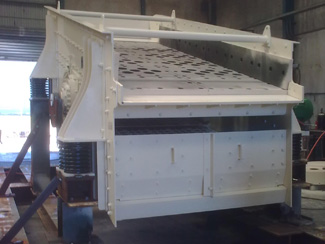
Select primary crusher feeders from Hawk Machinery in Australia for quarry operations requiring dependable feed control and practical equipment selection.
Australian quarries need feeders that can accept variable rock sizes and regulate material before it reaches the primary crusher. Primary crusher feeders should be selected around lump size, hopper arrangement, required throughput, installation angle and how fines need to be handled across the crushing circuit.
How Should Primary Crusher Feeders Be Selected for Heavy Quarry Loads?
Selection should start with the material and plant layout rather than feeder capacity alone. Hawk Machinery manufactures extra-heavy-duty vibrating grizzly feeders and Hi-FEED vibrating grizzly feeders that can operate as primary feeding units beneath ore bins or hoppers and can be installed horizontally or on an incline.
For large rock applications, the feeder must absorb loading impact while delivering material to the crusher at a controlled rate. Hawk Machinery’s Hi-FEED design uses a flat-pan impact area and grizzly section to separate smaller material before larger rock reaches the primary crusher. Feeder selection should match the feed size, loading method and downstream crusher, with heavy-duty models offering wear-resistant bars, adjustable gaps and liners.
What Should Quarry Operators Confirm Before Ordering?
Before specifying equipment, confirm:
- Maximum feed size: Identify the largest expected rock entering the hopper so the feeder and impact area can be assessed against the loading conditions.
- Required throughput: Provide the intended production rate and expected variations in feed rather than relying only on peak tonnage.
- Hopper and discharge arrangement: Record hopper outlet dimensions, discharge height and the space available between the hopper and primary crusher.
- Fines separation: Confirm whether grizzly sections are required to remove smaller material before crushing and what separation range the process needs.
- Installation angle: Determine whether the feeder will sit horizontally or on an incline within the plant layout.
- Wear and maintenance access: Consider wear areas, access around the feeder and how isolation will be managed during maintenance.
Our mining and quarry machinery range includes multiple feeder types, so the correct selection depends on the role the unit needs to perform within the processing circuit.
Match the Feeder to the Primary Crushing Circuit
Primary crusher feeders do not operate independently. Hopper geometry, loading method, crusher opening, transfer distance and surrounding structures all affect how material moves through the first stage of processing.
Our guide to proper vibrating feeder installation in quarrying operations notes that the main feeder absorbs impact and regulates feed to the primary crusher. This makes the interface between the hopper, feeder and crusher an important part of plant design.
Maintenance access should be planned at the same time. WorkSafe Victoria’s quarry safety alert on plant maintenance requires plant to be isolated, tagged out and tested before maintenance begins. Plant layouts should support safe isolation and maintenance access. We also provide custom layout and engineering support for fixed, skid and mobile quarry systems.
Specify Quarry Feeders Around Actual Site Conditions
Hawk Machinery has manufactured quarry and mining equipment in Melbourne since 1988, with its current range including extra-heavy-duty and Hi-FEED vibrating grizzly feeders for demanding material-handling applications.
When comparing primary crusher feeders, send us the expected feed size, throughput, hopper details, crusher information and available installation space. Request an equipment recommendation so we can review the application and identify a feeder configuration suited to the quarry’s processing requirements.