
 0411 099 989
Industrial Vibrating Feeder Selection: Sizing for Bulk Material Handling
April 21, 2026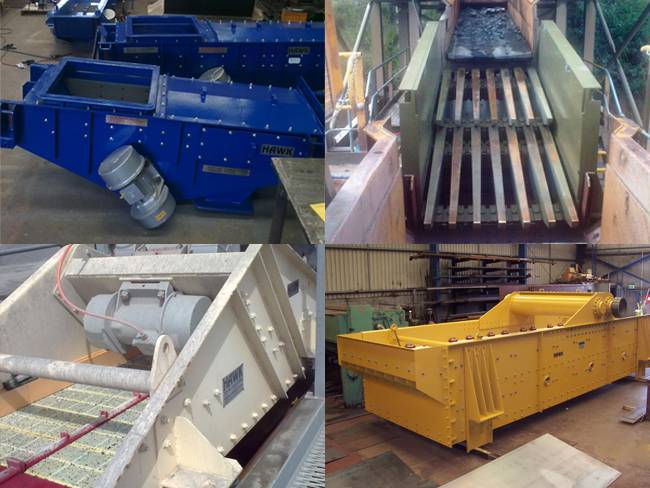
Refine industrial vibrating feeder selection with Hawk Machinery, durable bulk handling feeders engineered in Melbourne for mining and quarry sites.
Stable material flow supports consistent output across bulk handling systems. Industrial vibrating feeder selection influences throughput regulation, equipment durability, and downstream efficiency in crushing and screening circuits. Correct sizing reduces the likelihood of blockages, uneven loading, and unnecessary mechanical stress within the plant.
Production Demands and Capacity Planning
Throughput targets establish the technical baseline for industrial vibrating feeder selection. Rated tonnes per hour must account for both standard operating capacity and potential surge loading to prevent underperformance. Tray width, drive configuration, and vibration amplitude are determined using these production parameters.
Material characteristics require equal attention during specification. Bulk density, particle size range, and moisture content affect how the material reacts to vibration and discharge angles. Evaluating these factors early supports controlled feed rates and reduces avoidable wear on connected equipment.
Site Integration and Operational Requirements
Plant configuration and equipment interface points influence feeder sizing decisions. Industrial vibrating feeder selection should consider hopper geometry, discharge height, and the transfer point to crushers or conveyors. Proper alignment reduces uneven distribution of material and limits stress on structural components.
Operating flexibility remains important in multi-product environments. Adjustable speed and stroke settings allow operators to maintain consistent feed rates under changing material conditions. A feeder that suits both the layout and production demands contributes to stable plant performance.
Practical Sizing Data for Reliable Bulk Handling
Accurate feeder sizing relies on verified site data rather than assumptions. Clear technical inputs reduce specification errors and support long-term operational stability.
Essential sizing data:
- Throughput Requirement: Confirm peak and average tonnes per hour, including surge conditions, to determine tray width, motor power, and structural strength.
- Bulk Density: Calculate material weight per cubic metre to ensure the feeder structure and drive system can manage continuous duty conditions without excessive strain or fatigue.
- Maximum Lump Size: Identify the largest particle dimension to minimise bridging at the hopper interface and ensure even distribution across the feeder tray.
- Moisture Content and Flowability: Assess cohesion or stickiness that may affect discharge consistency and vibration efficiency, particularly in wet or clay-based materials.
- Installation Constraints: Review available footprint, headroom, and support structure capacity to confirm safe installation and integration with surrounding equipment.
Engineering Considerations for Long-Term Operation
Mechanical integrity and vibration management influence operational longevity in high-demand environments. Balanced drive assemblies, reinforced body construction, and correctly selected isolation components help reduce transmitted vibration and structural fatigue.
At Hawk Machinery, industrial vibrating feeder selection is assessed alongside site-specific risk considerations and relevant safety guidance to support reliable plant integration. This measured process ensures that the feeder configuration aligns with operational demands rather than relying on generic sizing assumptions.
Review our vibrating feeder equipment built for heavy-duty bulk handling.
Confident Feeder Specification for Bulk Handling Systems
Accurate specification contributes to predictable plant performance and manageable maintenance planning. Equipment that aligns with material properties and production targets supports consistent operation over time.
Hawk Machinery applies established engineering knowledge across Australian mining and quarrying applications to industrial vibrating feeder selection. We focus on precise sizing, robust construction, and practical system integration suited to your processing requirements.
Contact us to review your application data and confirm the appropriate feeder sizing for your bulk material handling system.
Related Blog Articles:
Heavy-Duty Feeders from Australia: How Hawk Machinery Powers Quarries Worldwide
Australian-Made Vibrating Screens & Feeders: Hawk Machinery’s Superior Solutions
Heavy-Duty Feeders from A Leading Mining Equipment Manufacturer in Australia – Maximise Output